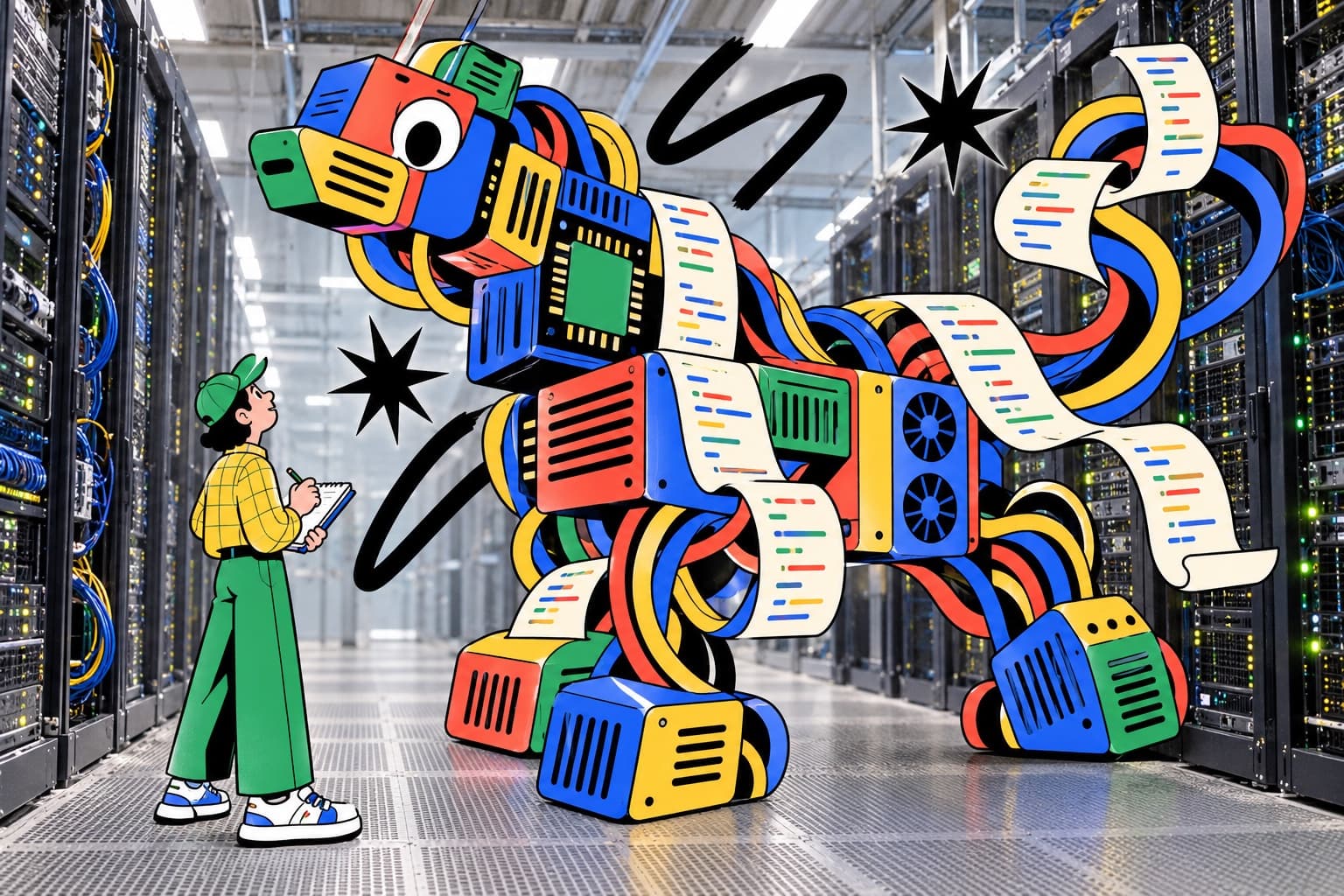
Capability is not a smooth curve
Two tasks can look similarly difficult to a person while sitting on opposite sides of an AI system's capabilities. Researchers call this a “jagged technological frontier.” Their preregistered experiment involved 758 consultants who worked on realistic tasks with or without GPT-4 access.
On tasks selected to be within the model's frontier, AI users completed more tasks, did them more quickly, and produced higher-quality results. On a complex task chosen to lie outside that frontier, AI users were less likely to get the correct answer. The same access that helped in one part of the workflow hurt in another.
Why confidence is a poor map
Fluent answers do not announce when a task has crossed the frontier. That puts a burden on the human to validate outputs with independent evidence, especially when a task involves hidden constraints or a consequential choice. A useful practice is to divide a job into claims that can be checked, run a small test, and ask whether the model has the context the task actually needs.
This is a study of particular consultants, tasks, and one model generation. It is not a permanent map of all AI capabilities. Its enduring insight is the unevenness: delegation needs feedback and verification because apparent similarity between tasks can be misleading. The paper details the experimental conditions and limitations.
Read the original.
Every story starts with a source. Check the methods and claims for yourself.
Read the field experiment · SSRN ↗