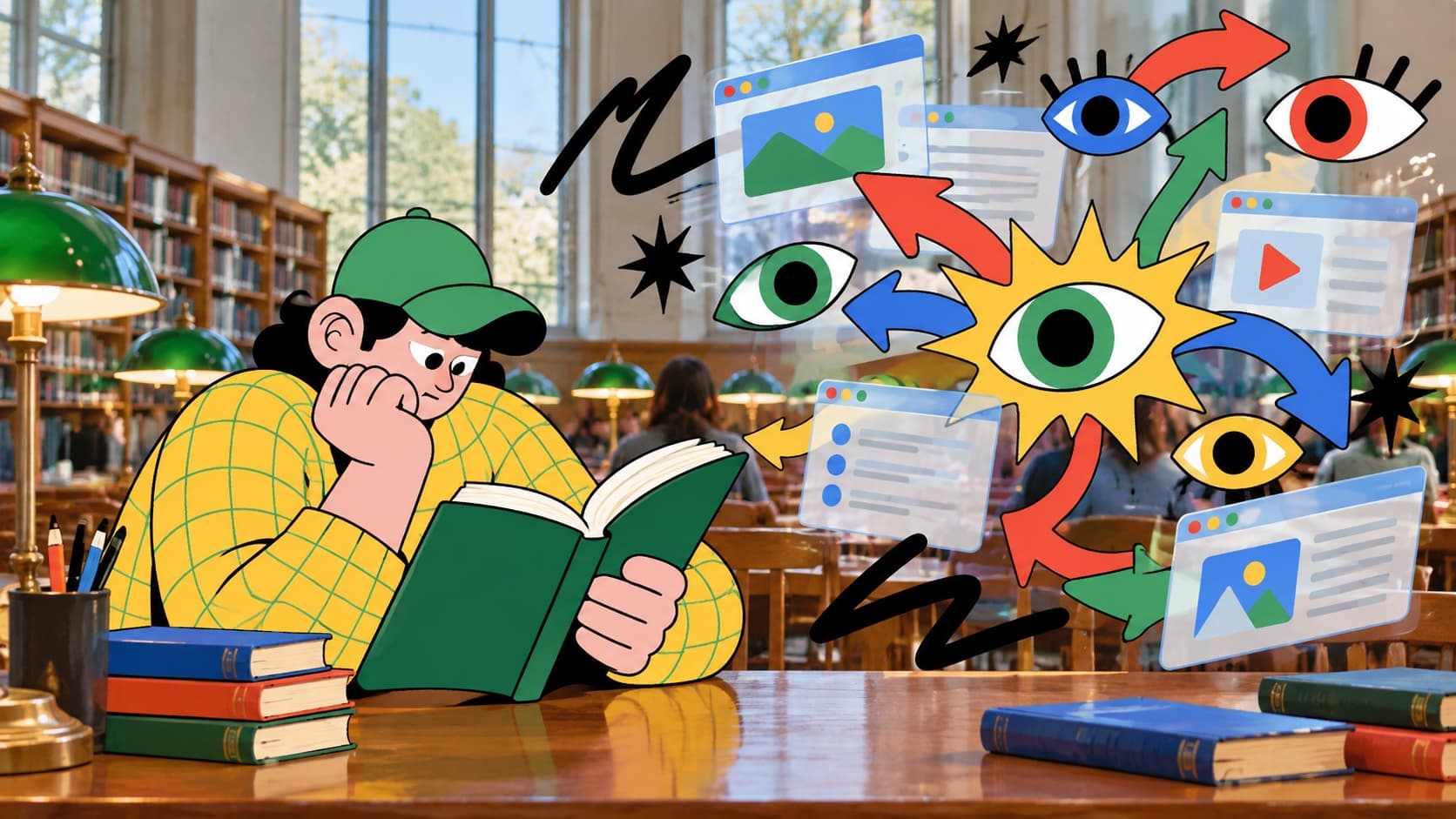
The question behind the shortcut
When a model drafts an answer, the human task does not disappear. It changes shape. In a CHI 2025 study, researchers surveyed 319 knowledge workers and collected 936 examples of generative AI use at work. People described checking facts, fitting generated material to their goals, and deciding whether the output was good enough to use.
The pattern that deserves attention is about confidence. Workers who reported greater confidence in the AI also reported less critical-thinking effort on a task. Greater confidence in their own ability went with more critical-thinking effort. That is an association in self-reports, not a demonstration that using AI erodes a person's thinking skill.
A different kind of effort
The researchers describe a shift from gathering information to verifying it, from solving a problem to integrating an answer, and from producing every part of a task to supervising the whole. These are real cognitive activities. They can also become superficial if the user accepts a fluent answer without checking its assumptions.
A practical response is to keep the decision visible: write down what must be true, ask what evidence would change your mind, and inspect the original source before an AI summary becomes a conclusion. The goal is not to reject help. It is to remain the person who knows why the answer is trusted.
What the study cannot tell us
The survey measures reported experiences and perceived effort. It does not follow participants over years or test whether their unaided reasoning ability improved or declined. Read the full paper for the methods and limitations.
Read the original.
Every story starts with a source. Check the methods and claims for yourself.
Read the CHI 2025 study ↗